Deb Kala Sangam
Aig Park Avenue, Gaur City 1, Sector 4, Greater Noida, Ghaziabad, Uttar Pradesh 201301, India
https://www.facebook.com/profile.php?id=100054404132788&mibextid=ZbWKwL
Deb Kala Sangam sits at the cultural heart of Kolkata’s Shyambazar, wedged between tram rails and century-old sweet shops whose smell of ghee drifts through its green-shuttered windows. Founded in 1973 by tabla maestro Debajyoti Roy and sarangi legend Ustad Kalamuddin Khan, the institution emerged from an evening adda on the second-storey terrace above Roy’s ancestral home; two instruments, two traditions, one resolve that the city deserved a haven where “riyaaz never stops.” Every week since, the peeling staircase has echoed with feet ascending for night-long baithaks that begin only when the rest of the traffic has fallen asleep.
The architecture is unpretentious—a thick-walled North Kolkata mansion adjusted slightly for acoustic kindness. After removing your shoes beneath the fading framed poster of Vilayat Khan’s 1967 concert in the courtyard, you walk up a narrow wooden staircase into a hall forty feet by twenty, its old Burma-teak floor worn smooth by countless chakkars. Six petromax lanterns were once suspended from a bamboo grid; today, warm Edison bulbs and discreet sound monitors share the beams. The far wall bears a single tanpura carved into the plaster, painted indigo, a visual drone that fills the space even when no instrument is playing.
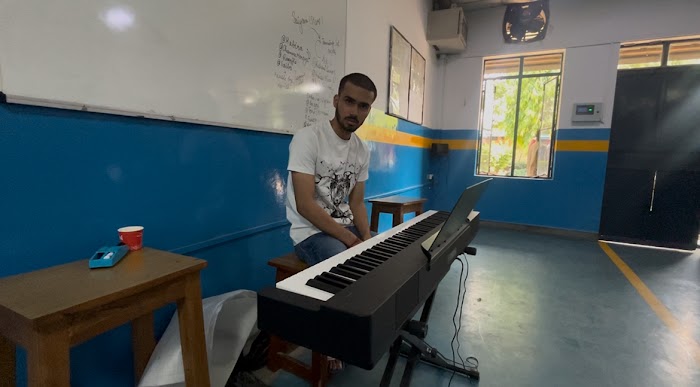
Curriculum melds the guru-shishya spirit with modern pedagogy. Daily classes start at dawn: 5 a.m. vocal alaap in the rooftop kholi across the alley, 6:30 p.m. sitar-sarangi jugalbandi workshops, 9 p.m. experimental ensembles led by visiting jazz pianists or electronic producers from Santiniketan. Two hundred students, ages seven to seventy, move through designated ragas each quarter, but equal weight is given to Kolkata’s living styles—baul, kirtan, Rabindra Sangeet—and to Deb’s own Hindustani repertoire. Quarterly exams culminate in “Kaal Sandhya,” an open-air all-nighter streamed online since 2020; tea from nearby Nantu’s stall arrives at 2 a.m., poured into disposable clay bhar that litter the floor like terracotta notes.
The faculty roster reads like a miniature oral encyclopaedia: Pandit Ajoy Chakraborty teaches masterclasses from his international tours via Zoom when not home in Lake Town; Ustad Rashid Khan’s nephew appears every Tuesday for four hours straight, no cellphone, no sheet music; Anusua Mukherjee, once the youngest All India Radio approved vocalist, now trains the children’s choir in Konnakol syllables to strengthen rhythmic memory. Fees remain “absolutely pay-as-the-heart-likes”; the trust finances its activities through crowd-funding concerts on the verandah of Coffee House on College Street and through the sale of handmade surpeti boxes whose proceeds cover scholarships for girls from Bihar’s Muzaffarpur district.
Sunday evenings are the most democratic. At 7 sharp the house doors are flung open, no passes, no seating chart. Rickshaw pullers squat beside professors, and during monsoon, when rain slashes sideways through the Venetian blinds, Kala Sangam’s caretaker Dulal-da flicks switches to drop canvas awnings while tabla strokes quicken to answer the thunder. The sound that stays with you when you leave is not pure khayal but something richer: tanpura, dripping tiles, the far-off clang of a tram bell, all braided into one living raag by an institution that refuses to treat music as anything other than the oxygen Kolkata breathes.
Check on Google Maps
- Published: August 4, 2025