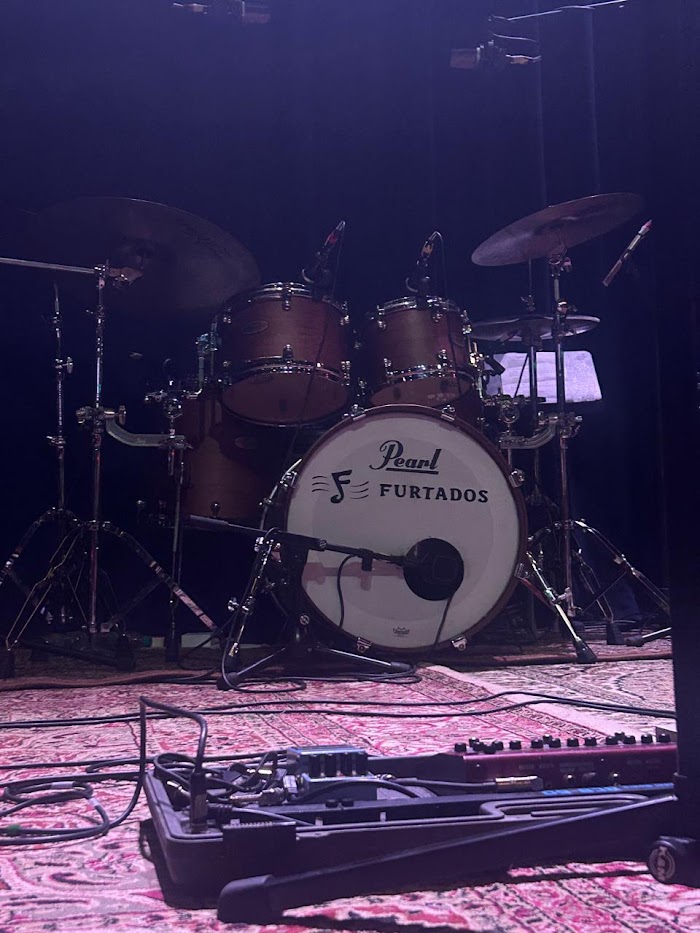

Art-n-Artist Academy
G-122, Beta 2 Rd, Block G, Stree-3, Greater Noida, Uttar Pradesh 201310, India
Art-n-Artist Academy feels less like a traditional school and more like a breathing art-space that happens to teach music. Set in a reclaimed 1920s textile warehouse two blocks from the riverwalk of a mid-sized Atlantic seaboard city, the brick shell was stripped to its iron beams and then lined with cedar, glass walls, and retractable skylights so that natural light slides diagonally across the studios in constantly shifting bars of gold. The main entry hall—an atrium 40 feet high—contains a live birch tree whose roots are surrounded by modular synthesizer modules mounted on brass rails. Sound-warmers—small, contact-driven speakers—are threaded through the branches so the tree itself becomes a sub-bass resonator whenever the electro-acoustic classes rehearse. Nothing here is decorative only; every object is expected to produce, refract, or record sound.
Six floors spiral around the atrium. Basement level is the Repair & Resonance Lab, filled with vintage amps pulled from Memphis pawn shops and Mumbai street markets; students learn to bias tubes and hot-rod analog circuit boards while developing tonal memory rather than purely visual analysis. Floor One houses the hybrid concert-café, where patrons sip chutney lattes during noon-hour micro-recitals that mute the coffee grinders halfway through each measure to demonstrate dynamic contrast. Floors Two and Three are practice modules: rooms clad in cork and hemp whose walls can be tuned magnetically to alter reverberation times from 0.6 to 5.5 seconds. Each door bears a plaque laser-etched with the waveform of the last piece rehearsed inside—a running sonic archive of the room’s history.
Academic floors Four and Five consist of the Composition Cloisters: hexagonal alcoves furnished with desks made from retired piano lids, networked 40-channel spatial audio ceilings, and balconies that overlook the city through glass planks that dampen street noise to 28 dB while leaving light intact. Senior composers curate nightly “sound postcard” assignments broadcast from these balconies, short five-minute works that tourists below can stream on their phones while staring up at the building’s façade—an ever-changing nightly soundtrack nobody asked for yet many now depend on before sleep.
The top floor is the Rooftop Residency Garden. Twenty-foot freight-car doors roll back to reveal raised beds of lavender and lemongrass whose harvest wavelengths were mapped according to chlorophyll absorption frequencies; at dusk students process the plants into essential oils, bottle them, and then sample the bottles’ glass resonance as percussion tracks for their final projects. Solar-light tubes and rainwater siphons power and hydrate the rooftop’s battery-driven performance stage, creating fully off-grid concerts every equinox.
Faculty ratios stay at five students per mentor; mentors include tabla cine-score veterans, Ableton-certified trap producers, and experimental opera sopranos who compose solely for the human whip-crack range. Trimesters revolve around three rotating themes—Site, Memory, Future—ending not with typed papers but with tangible sound sculptures the academy loans to regional museums and abandoned subway stations. In this way graduation becomes not an exit but an incursion, seeding the wider city with music that leaks, pulses, and grows long after certificates are rolled across the birch-root forest floor.
Check on Google Maps






- Published: August 11, 2025